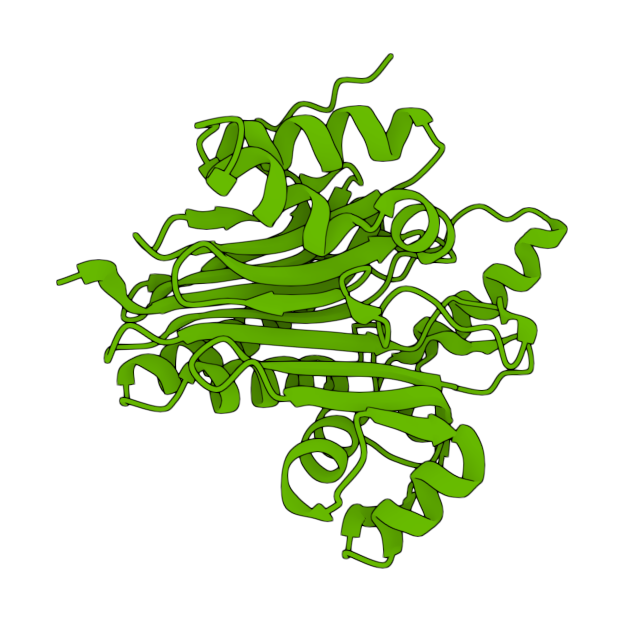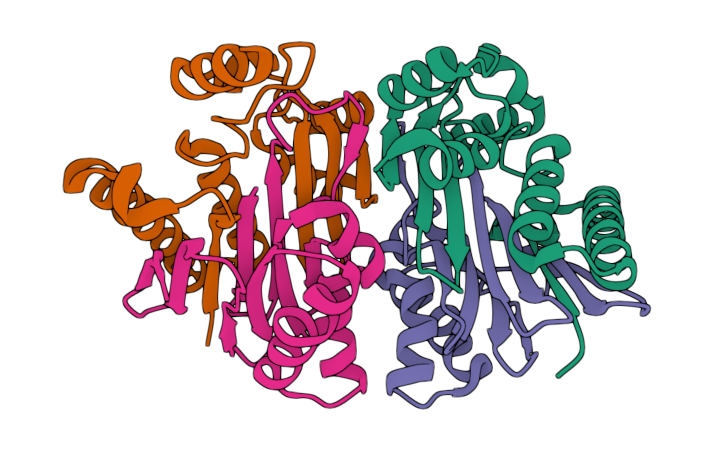
5 experimentally studied proteins
9 sequences in Swiss-Prot
8,892 unique sequences in UniRef100
Historical "type III" l‑asparaginases (or l‑asparaginase-like proteins) / isoaspartyl peptidases from bacteria, plants and fungi.
Clan 5: Family 13, Family 14, Family 15, Family 16, Family 17, Family 18
| Fam ? Class - Clan - Family | Alt ? Alternative historical name / classification | AN ? UniProt accession number | Name ? UniProt entry name, only given here for Swiss-Prot entries | EC | Organism | Cell-Loc | AAs | Structure | PDB | Km i for Asn [mM] | Vmax i for Asn [μmol/min/mg] | Kcat i for Asn [s-1] |
|---|
| Fam ? Class - Clan - Family | Alt ? Alternative historical name / classification | AN ? UniProt accession number | Name ? UniProt entry name, only given here for Swiss-Prot entries | EC | Organism | Cell-Loc | AAs | Structure | PDB | Km i for Asn [mM] | Vmax i for Asn [μmol/min/mg] | Kcat i for Asn [s-1] |
|---|

Clan 5 also holds families of isoaspartyl peptidases.
Family 14 contains the quintessential type III l‑asparaginases (or l‑asparaginase-like proteins) from plants: the Lupinus luteus LlAIII (Q9ZSD6) and the Phaseolus vulgaris PvAIII (V7CU13), but interestingly also the cytoplasmic Escherichia coli EcAIII (P37595). Protein structures have been solved for all three of these. Aside from plant and bacterial enzymes, this family also holds enzymes of fungal origin