4 experimentally studied proteins
23 sequences in Swiss-Prot
3,107 unique sequences in UniRef100
Eukaryotic aspartylglucosaminidases
| Fam ? Class - Clan - Family | Alt ? Alternative historical name / classification | AN ? UniProt accession number | Name ? UniProt entry name, only given here for Swiss-Prot entries | EC | Organism | Cell-Loc | AAs | Structure | PDB | Km i for Asn [mM] | Vmax i for Asn [μmol/min/mg] | Kcat i for Asn [s-1] |
|---|
| Fam ? Class - Clan - Family | Alt ? Alternative historical name / classification | AN ? UniProt accession number | Name ? UniProt entry name, only given here for Swiss-Prot entries | EC | Organism | Cell-Loc | AAs | Structure | PDB | Km i for Asn [mM] | Vmax i for Asn [μmol/min/mg] | Kcat i for Asn [s-1] |
|---|

Clan 1 contains five families that are to an extent phylogenetically distinct from the other clans; they have aspartylglucosaminidase (AGA) activity in addition to l‑asparaginase activity.
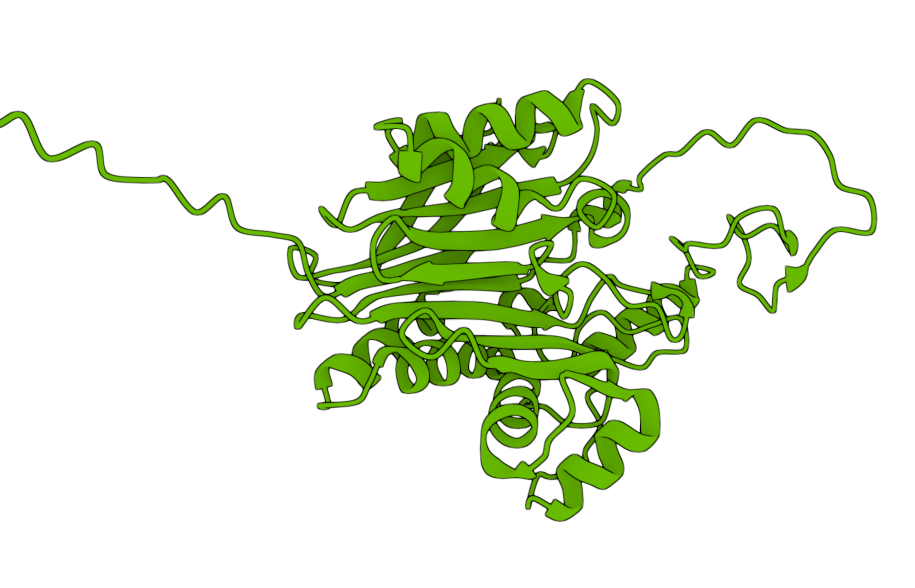
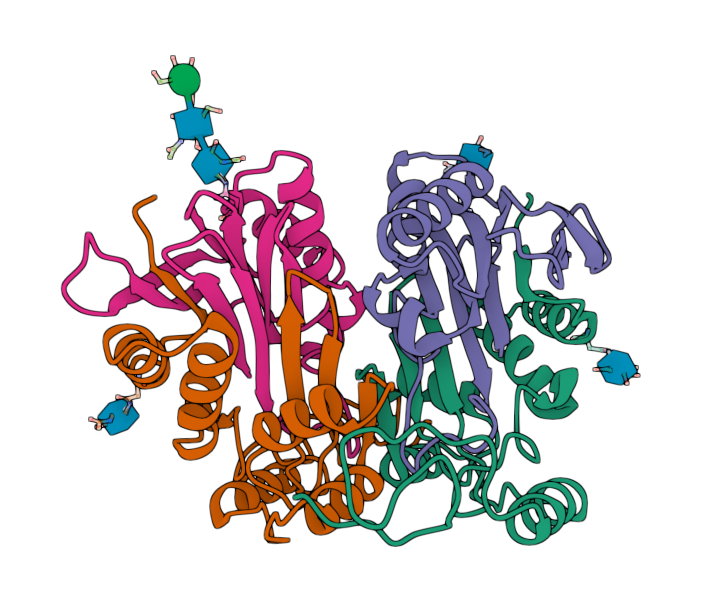
Family 2 is well-studied and contains sequences of eukaryotic origin. One protein structure has been solved, the lysosomal Homo sapiens AGA (P20933); its Km for l‑asparagine is about four times higher than for aspartylglucosamines.