13 experimentally studied proteins
1 sequences in Swiss-Prot
7,894 unique sequences in UniRef100
Bacterial l‑asparaginases
Bacillus licheniformis l‑asparaginase, a dimeric enzyme with a Km potentially in the micromolar range
| Fam ? Class - Clan - Family | Alt ? Alternative historical name / classification | AN ? UniProt accession number | Name ? UniProt entry name, only given here for Swiss-Prot entries | EC | Organism | Cell-Loc | AAs | Structure | PDB | Km i for Asn [mM] | Vmax i for Asn [μmol/min/mg] | Kcat i for Asn [s-1] |
|---|
| Fam ? Class - Clan - Family | Alt ? Alternative historical name / classification | AN ? UniProt accession number | Name ? UniProt entry name, only given here for Swiss-Prot entries | EC | Organism | Cell-Loc | AAs | Structure | PDB | Km i for Asn [mM] | Vmax i for Asn [μmol/min/mg] | Kcat i for Asn [s-1] |
|---|
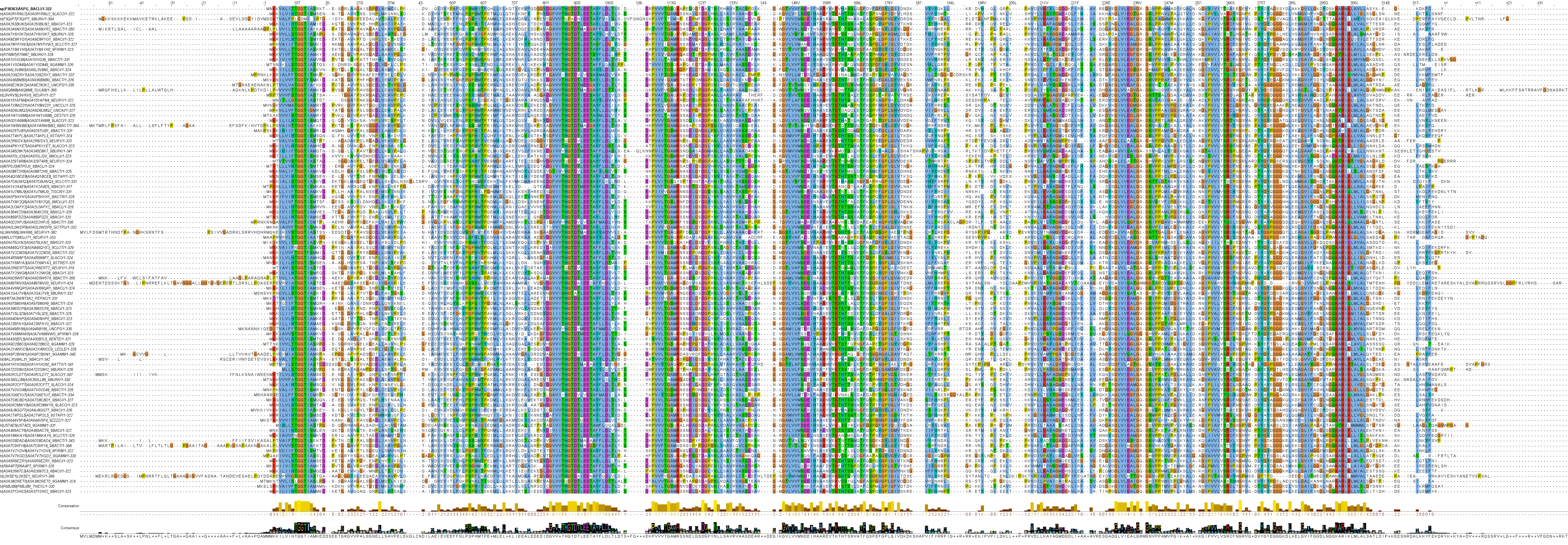
Clan 2 is closest to Clan 1 on the tree, but there is a distinct phylogenetic gap. The sequences are also predominantly of bacterial origin, however, this clan is not as well studied as Clan 1.
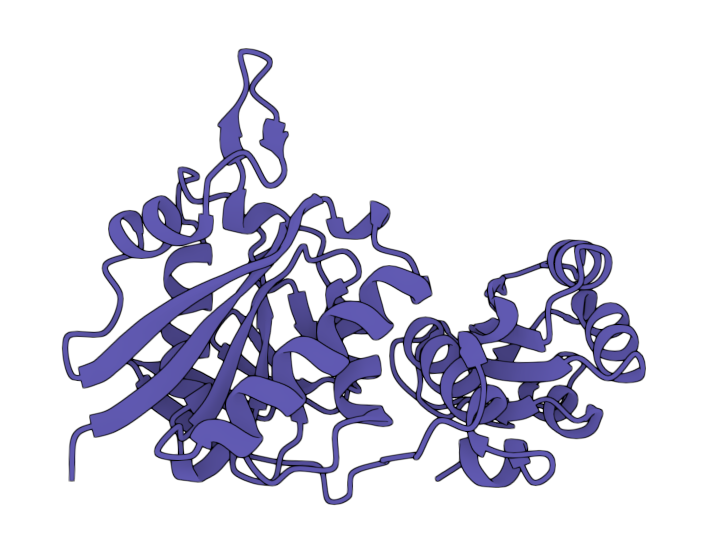
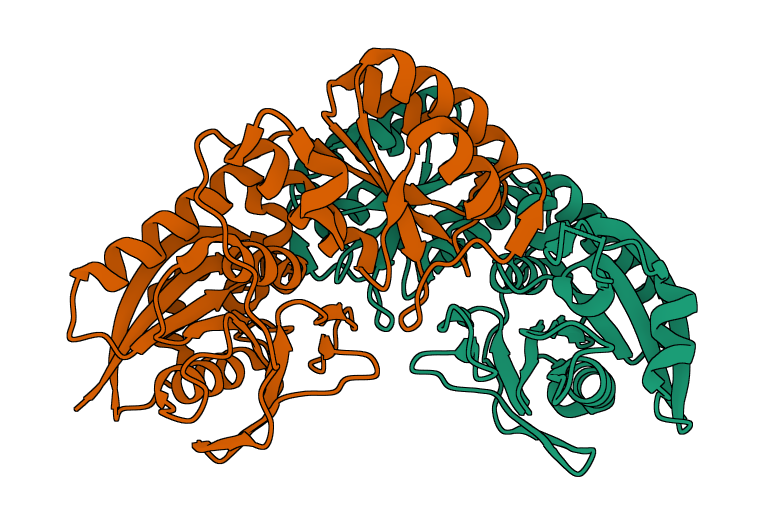
One protein structure has been solved in Family 5: the Bacillus licheniformis BlA (closest in Swiss-Prot: P30363, actual: A0A6I7U6Y2). The authors report that the native form is homo dimeric and despite similar overall folded topology, there are notable structural differences to other l‑asparaginases with solved structures: a longer loop near the active site, a unique linker loop and a different β-hairpin structure in the N-terminal domain. To an extent, these specificities are present throughout Clan 2 in predicted AlphaFold structures, too. The BlA and similar sequences have caused issues in the historical classification, as they show similarities to both "type I" and "type II" l‑asparaginases.